Mastering Positive and Negative Numbers: A Comprehensive Guide to Adding and Subtracting

Understanding the Basics of Positive and Negative Numbers
Adding and subtracting positive and negative numbers can be a challenging concept for many students. However, with the right approach and practice, it can become a breeze. The key to mastering this concept is to understand the basics of positive and negative numbers and how they interact with each other. A positive number is any number greater than zero, while a negative number is any number less than zero. When adding or subtracting these numbers, it's essential to remember that the sign of the result depends on the signs of the numbers being added or subtracted.
The rules for adding and subtracting positive and negative numbers are straightforward. When adding two numbers with the same sign, you add their absolute values and keep the same sign. For example, 2 + 3 = 5, and -2 + (-3) = -5. When adding two numbers with different signs, you subtract their absolute values and take the sign of the number with the larger absolute value. For instance, 2 + (-3) = -1, and -2 + 3 = 1.
Practicing with Worksheets: A Key to Mastery
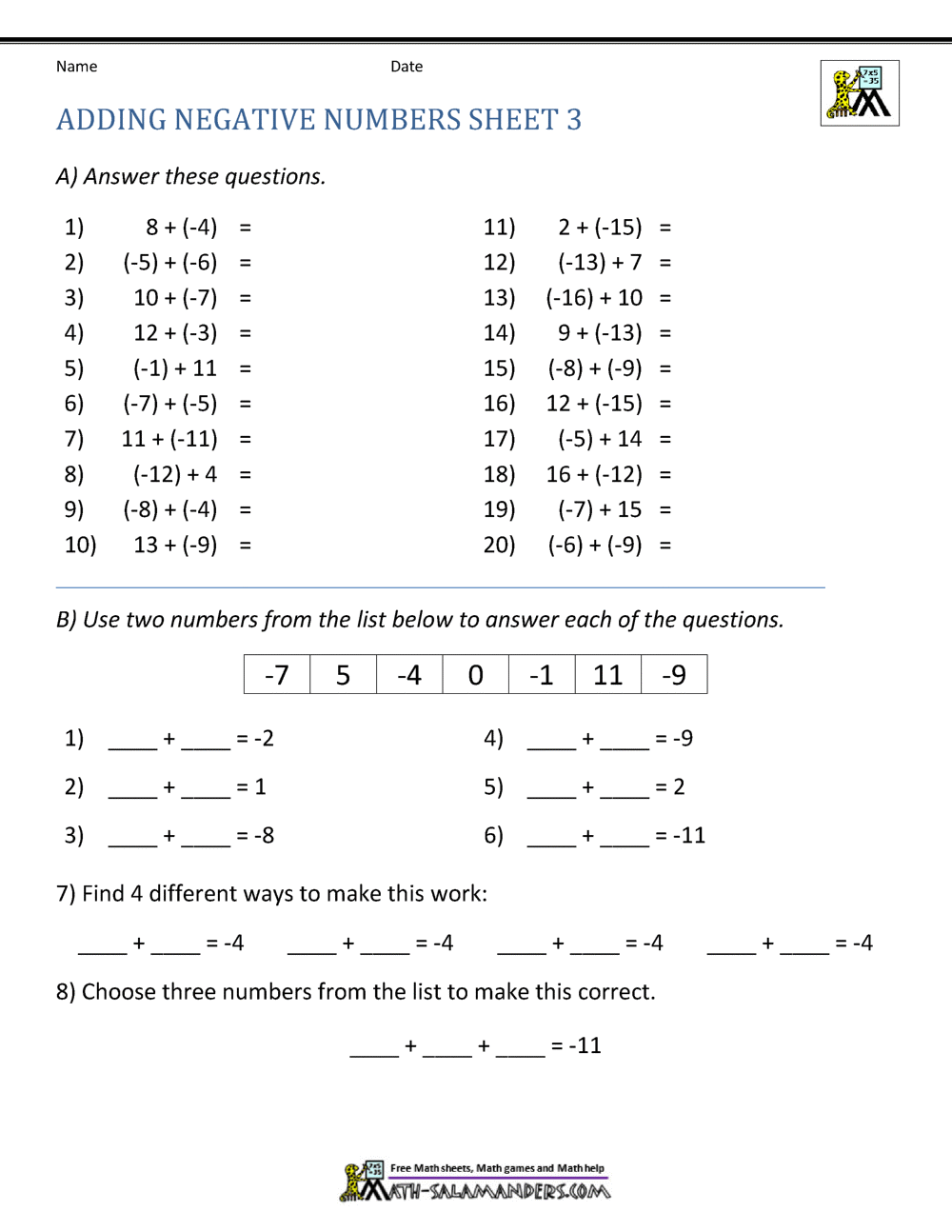
To become proficient in adding and subtracting positive and negative numbers, practice is essential. Using worksheets specifically designed for this purpose can help you reinforce your understanding of the concept and build your confidence. These worksheets typically include a variety of exercises, ranging from simple addition and subtraction problems to more complex ones that involve multiple operations. By working through these exercises, you'll develop a deeper understanding of how positive and negative numbers work and improve your ability to apply this knowledge in different contexts.