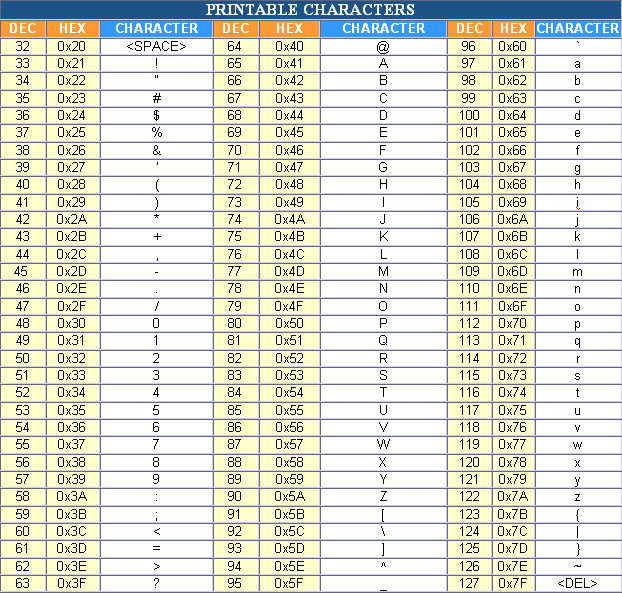
Ascii Table Printable And Non Printable Characters
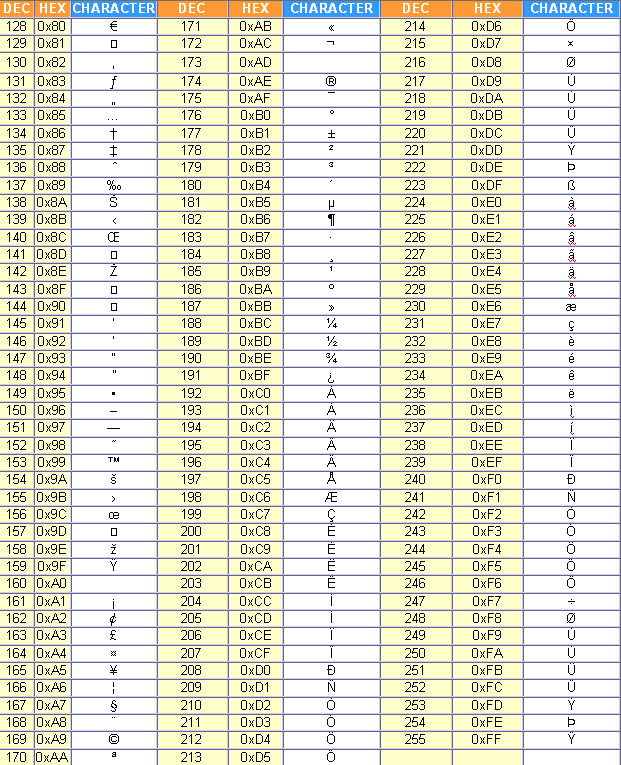

Introduction to ASCII Characters
The ASCII table is a character encoding standard that assigns unique codes to characters, including letters, numbers, symbols, and control characters. It is widely used in computing and programming to represent text and other data. The ASCII table consists of 128 characters, ranging from 0 to 127, each with a specific meaning and use. In this article, we will explore the ASCII table, focusing on printable and non-printable characters, their differences, and significance.
The ASCII table is divided into two main categories: printable and non-printable characters. Printable characters are those that can be displayed on a screen or printed on paper, such as letters, numbers, and symbols. They are used to represent text, numbers, and other data in a human-readable format. Non-printable characters, on the other hand, are used for control purposes, such as formatting text, indicating the start or end of a file, or signaling errors.
Printable vs Non-Printable Characters
Non-printable characters are not displayed on the screen, but they play a crucial role in computing and programming. They are used to control the flow of data, indicate the structure of a file, or trigger specific actions. For example, the newline character (ASCII code 10) is used to indicate the start of a new line, while the tab character (ASCII code 9) is used to insert a horizontal tab. Understanding the difference between printable and non-printable characters is essential for working with text files, programming, and data analysis.