
Understanding Factor Pairs in Math: A Comprehensive Guide

What are Factor Pairs?
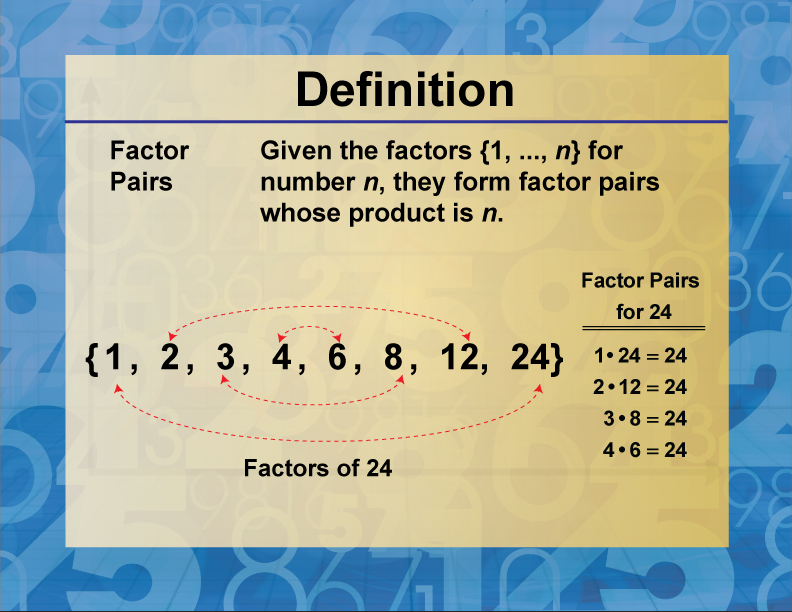
Factor pairs are a fundamental concept in mathematics that play a crucial role in various mathematical operations, such as multiplication, division, and factoring. In simple terms, factor pairs are two numbers that multiply together to give a specific product. For example, the factor pairs of 12 are (1, 12), (2, 6), and (3, 4), as each of these pairs multiplies to 12.
The concept of factor pairs is essential in math as it helps in solving equations, finding the greatest common divisor (GCD), and factoring algebraic expressions. Moreover, understanding factor pairs can also help in real-life applications, such as calculating the area of a rectangle, the volume of a rectangular prism, and the cost of materials for a construction project.
How to Find Factor Pairs
What are Factor Pairs? Factor pairs can be classified into different types, including prime factor pairs, composite factor pairs, and negative factor pairs. Prime factor pairs are pairs of prime numbers that multiply to give a composite number, while composite factor pairs are pairs of composite numbers that multiply to give another composite number. Negative factor pairs, on the other hand, are pairs of negative numbers that multiply to give a positive number.
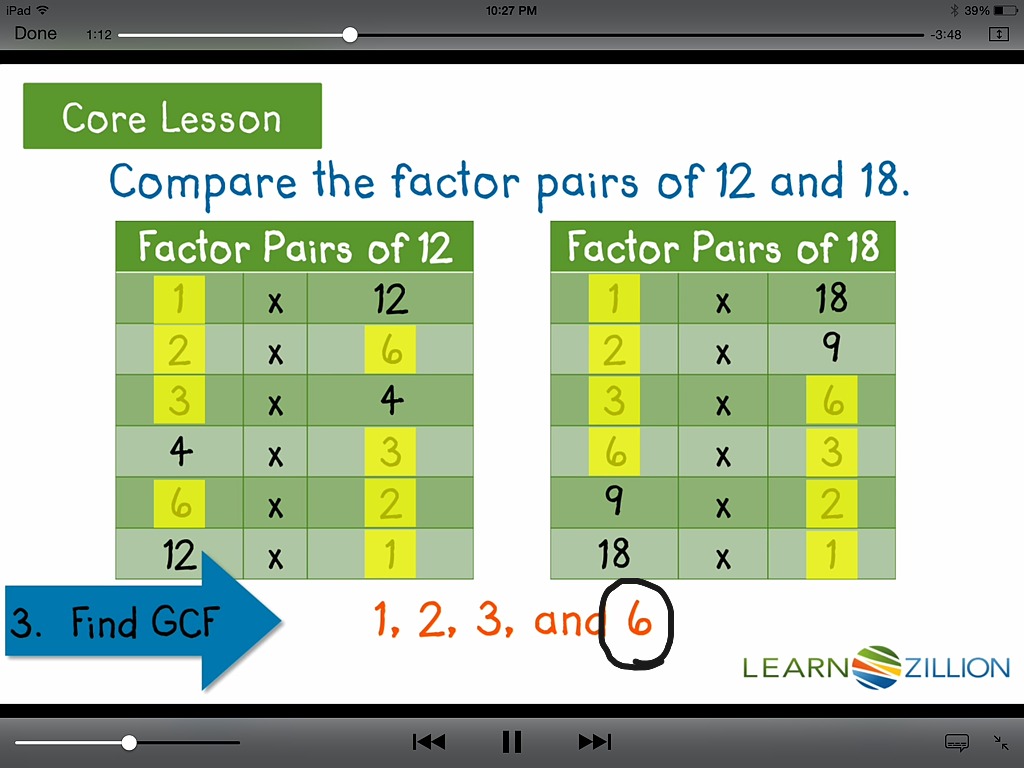
How to Find Factor Pairs To find factor pairs, start by listing all the factors of a given number. Then, pair up the factors that multiply to give the original number. For instance, to find the factor pairs of 18, list all the factors of 18, which are 1, 2, 3, 6, 9, and 18. Then, pair up the factors: (1, 18), (2, 9), and (3, 6). By understanding factor pairs and how to find them, you can improve your math skills and become more proficient in solving mathematical problems.