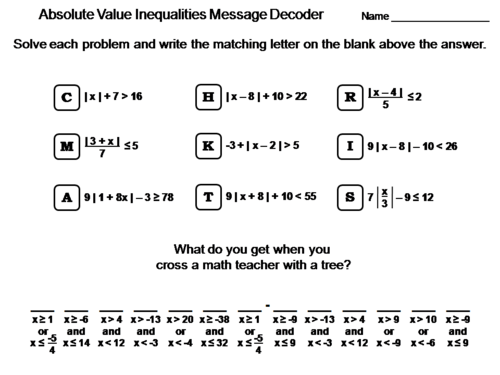
Mastering Absolute Value Inequalities: A Comprehensive Guide

Understanding Absolute Value Inequalities
Solving absolute value inequalities can be a daunting task for many students, but with the right approach and practice, it can become a breeze. An absolute value inequality is a statement that involves the absolute value of an expression being greater than, less than, greater than or equal to, or less than or equal to a certain value. For instance, |x| > 3 is an absolute value inequality that states the absolute value of x is greater than 3.
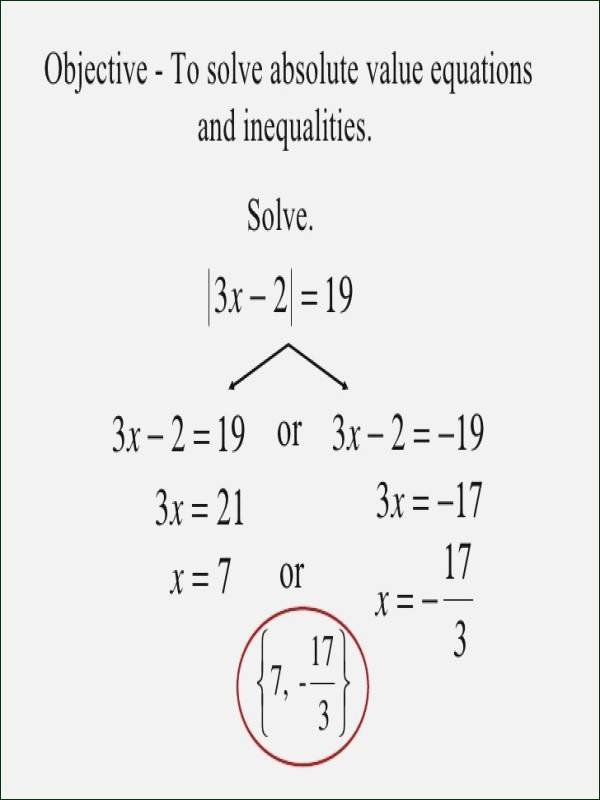
To solve absolute value inequalities, one must first understand the concept of absolute value. The absolute value of a number is its distance from zero on the number line, without considering direction. For example, the absolute value of -5 is 5, and the absolute value of 5 is also 5. When solving absolute value inequalities, it's essential to consider both the positive and negative cases of the expression inside the absolute value bars.
Practical Tips for Solving Absolute Value Inequalities
When solving absolute value inequalities, it's crucial to isolate the absolute value expression and then analyze the inequality. For instance, to solve |x| > 3, we need to consider two cases: x > 3 and x < -3. This is because the absolute value of x is greater than 3 when x is either greater than 3 or less than -3. By breaking down the inequality into these two cases, we can find the solution set for the inequality.
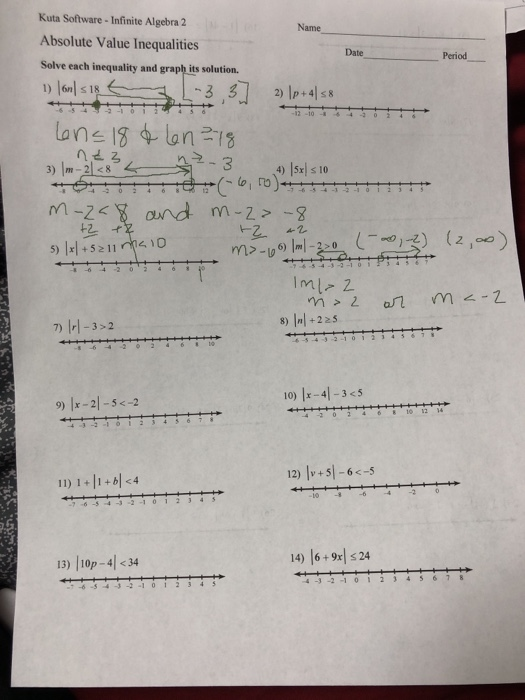
To become proficient in solving absolute value inequalities, it's essential to practice with a variety of problems. Our solving absolute value inequalities worksheet provides a comprehensive set of exercises to help you master this concept. Additionally, it's crucial to read the problems carefully and consider all possible cases when solving absolute value inequalities. With patience, practice, and persistence, you'll become an expert in solving absolute value inequalities in no time.