
Writing Decimals In Expanded Form: A Guide


What is Expanded Form?
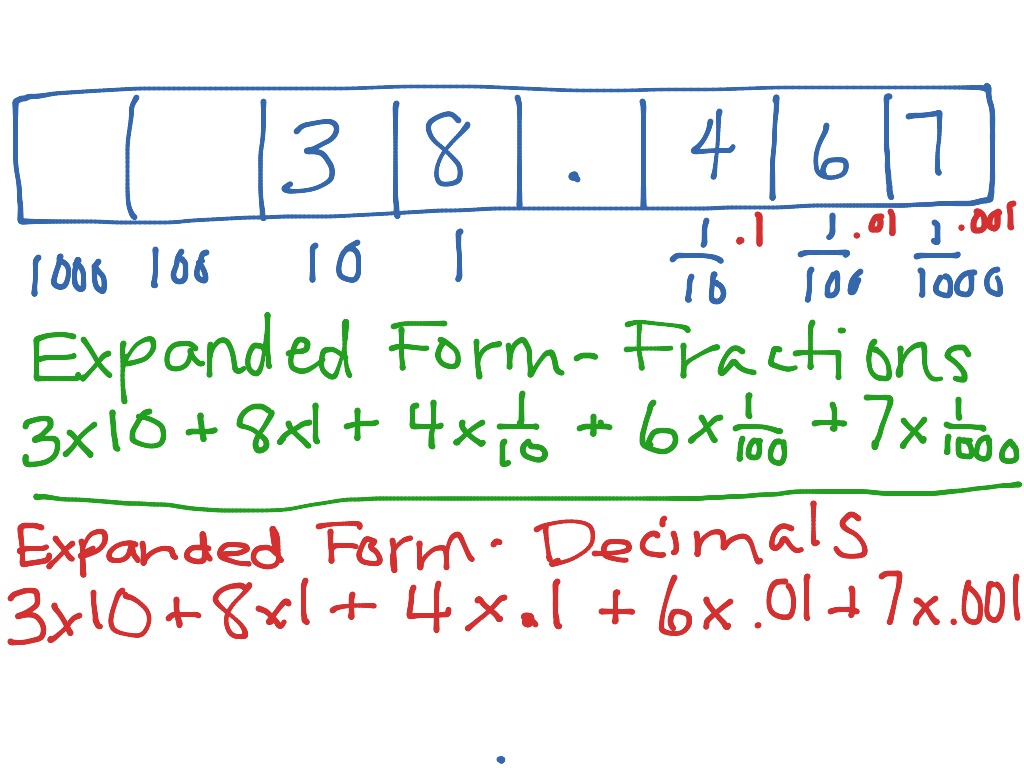
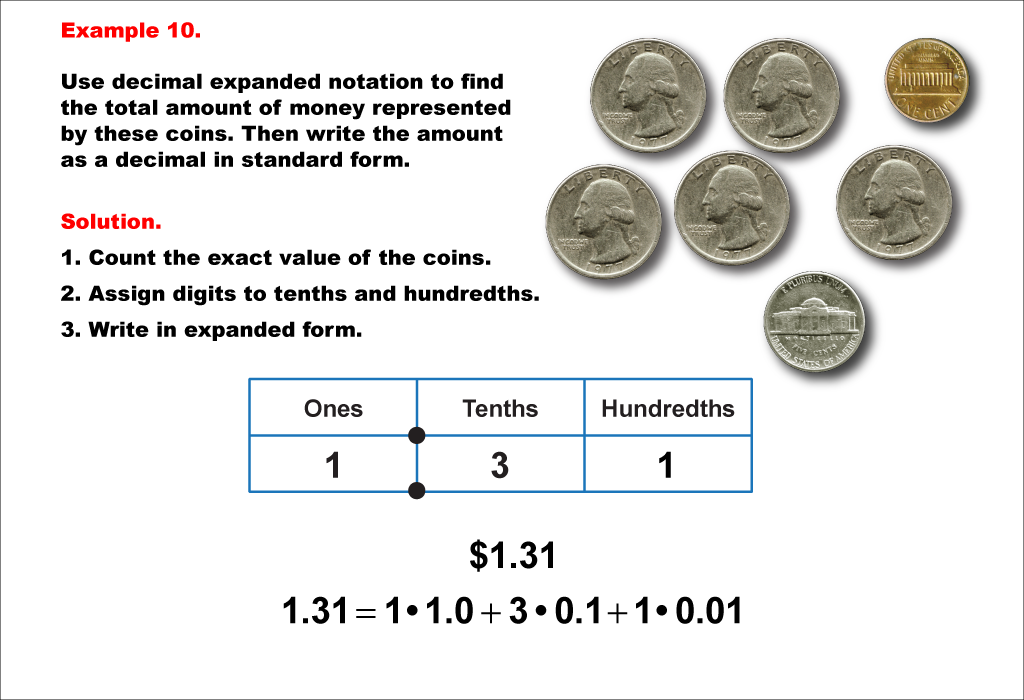
Writing decimals in expanded form is a fundamental concept in mathematics that helps students understand the value of decimal numbers. It involves expressing a decimal number as a sum of its place values. For instance, the decimal number 4.25 can be written in expanded form as 4 + 0.2 + 0.05. This concept is crucial in helping students develop a deeper understanding of decimal numbers and their applications in real-life scenarios.
The concept of expanded form is not limited to whole numbers. It can also be applied to decimal numbers, which can be broken down into their place values. By writing decimals in expanded form, students can better comprehend the relationship between decimal numbers and their equivalent fractions. Moreover, it helps students to perform arithmetic operations involving decimals with greater accuracy and confidence.
Examples of Writing Decimals in Expanded Form
What is Expanded Form? Expanded form is a way of expressing a number as a sum of its place values. Each digit in the number is multiplied by its corresponding place value, and the results are added together. For example, the number 456 can be written in expanded form as 400 + 50 + 6. This concept can be applied to decimal numbers as well, where each digit after the decimal point is multiplied by its corresponding place value.
Examples of Writing Decimals in Expanded Form To write decimals in expanded form, start by identifying the place value of each digit after the decimal point. For example, the decimal number 3.45 can be written in expanded form as 3 + 0.4 + 0.05. Similarly, the decimal number 9.87 can be written in expanded form as 9 + 0.8 + 0.07. By practicing with examples, students can develop a better understanding of writing decimals in expanded form and improve their math skills.